

🌟 New Year Offer 🌟
Celebrate 2026 with 30% OFF on all products! Use code: NEWYEAR2026. Hurry, offer ends soon!
One of the key advantages of body-oriented psychotherapy is that it allows the therapist to approach a client’s inner experiences gently, skillfully bypassing psychological resistance. Most importantly, the body is the shortest path to the unconscious, and therefore to the roots of many problems. File size: 7.842 GB, Format file: 6 MP4.
Tatyana Koloshina – Body-oriented therapy

Today, body-oriented therapy (BOT) has gained broad popularity among psychotherapists and psychologists, as an understanding of the body’s language can offer more reliable insight into a person than words alone. A patient’s body can reveal their problems and character far more quickly—and often far more fully—than the patient can themselves.
One of the key advantages of body-oriented psychotherapy is that it allows the therapist to approach a client’s inner experiences gently, skillfully bypassing psychological resistance. Most importantly, the body is the shortest path to the unconscious, and therefore to the roots of many problems.
At the same time, bodywork is aimed not only at resolving psychological difficulties and treating mental disorders, but also at improving overall health and well-being.
Because body-oriented therapy is not subject to the patient’s conscious censorship, it often works more quickly and effectively than purely verbal techniques.
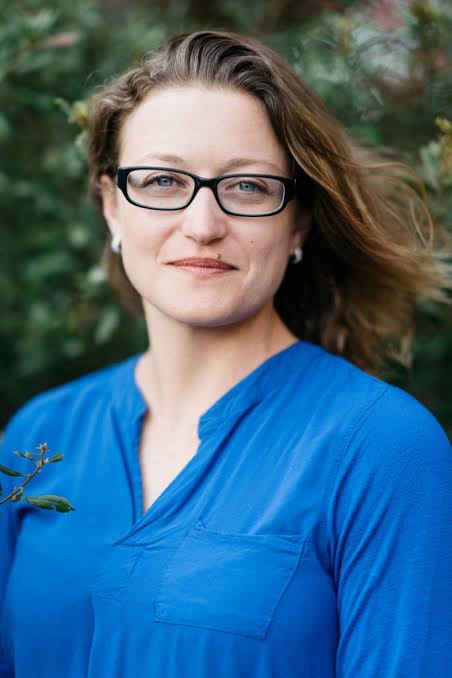
Tatyana Koloshina
Clinical psychologist, Candidate of Psychological Sciences, and Associate Professor in the Department of Clinical Psychology at the Russian State University for the Humanities (RSUH). One of Russia’s leading art therapists, she is a member of the Professional Psychotherapeutic League, trainer-supervisor of the Russian Association for Body-Oriented Psychotherapy (ATOP), member of ATOP’s Expert Council, member of the International Association of Art Therapists and Art Educators metamorphosis, and member of the Professional Medical Association of Psychotherapists, Psychologists, and Social Workers.
She specializes in body-oriented therapy, biosynthesis, art therapy, and psychosynthesis. Many of her methods are original authorial developments and therefore unique. Her teaching is distinguished by clarity and precision in presenting theoretical material, as well as by the high quality of practical demonstrations.
Her professional interests include art therapy, body-oriented psychotherapy, crisis intervention, psychosynthesis, and group therapy.
**Contents of Disc 1**
1. What Is Body-Oriented Therapy?
2. Core Issues Manifested in the Body:
* overcontrol (head);
* relationships and contact with others (shoulders, arms);
* sexuality (pelvis);
* grounding and support (legs).
3. A possible framework for describing a client’s existential situation.
4. Wilhelm Reich’s vegetotherapy.
5. Working with the throat and hands.
**Contents of Disc 2**
1. Three principles of body-oriented work. Working with overcontrol.
2. Warm-up.
3. The “Theater of Touch” exercise.
4. Working with boundaries.
Games and exercises for developing body awareness.
5. “Attraction and Repulsion.”
6. Reading nonverbal information.
7. Working with bodily tension and blockages.
8. Developing body awareness.
9. “Tension and Relaxation.”
10. Nonverbal interaction.
11. Alexander Lowen’s bioenergetics.
**Contents of Disc 3**
1. An exercise for working with auto-aggression.
2. Awareness through movement according to Moshe Feldenkrais.
3. An exercise for working with fears and trauma.
4. Working with the heart.
5. The concept of breathing patterns.
6. Four stages of a person’s interaction with the world:
* tactile phase;
* oral phase;
* anal phase;
* genital phase.
7. Description of four key problems and their corresponding symptoms.
8. Working with breathing patterns.
9. Working with overcontrol, blockages, and fears.
10. The process of becoming aware of one’s existential situation through the body.
11. A group exercise for relaxation, trust, and interaction.
**Contents of Disc 4**
1. The nature of muscular tension according to Wilhelm Reich.
2. The impact of body-oriented therapy on the layers of personality.
3. Breathing as a way a person interacts with the world. Exercises.
4. Three levels of expressing problems. Voice work.
5. Applications.
6. An exercise for the lower jaw.
7. The exercise “Pushing the Voice Upward Like a Ball.” Working with symptoms according to Zuev.
8. Purpose.
9. An exercise for the arms: “The Main Channel of Free Energy.”
10. The “Playing the Fool” exercise.
11. The exercise “Shaking and Stretching the Arms.”
12. A shoulder exercise: “The Cross.”
13. An exercise for the arms and legs.
**Contents of Disc 5**
1. Working with symptoms (continued).
2. A head exercise: “Oscillation.”
3. The exercise “Professor Dowell’s Head.”
4. A neck exercise.
5. Exercises for the forehead and eyebrows.
6. The exercise “Washing the Head.”
7. An exercise for the ears.
8. An exercise promoting the integration of head and body.
9. The connection between the abdomen and feelings. Vector theory.
10. Group voice work.
11. A BEST technique for depression.
12. Parent-child relationships. How to work with children.
13. Seven techniques for working with the abdomen.
**Contents of Disc 6**
1. Working with the legs and pelvis.
2. Stereometric massage.
3. Neurosis as a split between the “head” and the “heart.”
4. The difference between feelings and emotions.
Structural work in the heart area.
5. Exercise 1.
6. Exercise 2.
7. Exercise 3.
8. Exercise 4.
9. Exercise 5.
10. Exercise 6.
Course Features
- Lecture 0
- Quiz 0
- Duration 10 weeks
- Skill level All levels
- Language English
- Students 1
- Assessments Yes