
🌟 New Year Offer 🌟
Celebrate 2026 with 30% OFF on all products! Use code: NEWYEAR2026. Hurry, offer ends soon!
The movement primitives, which are the basis for all human movement. You will learn how movement primitives are found at all levels of action.
An Introduction to the Primitives
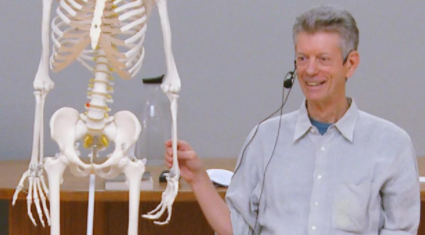
An Introduction to the Primitives
Primitive
[L., primitivus, first or earliest of its kind]
Mathematics
Applied to a line or figure from which some construction or reckoning begins, or to an operation not derived from another
Biology, Anatomy
Get immediately download An Introduction to the Primitives
Applied to a part or structure in the first or very early stage of formation
In this advanced training, Dennis Leri introduces and makes applicable the notion of a primitive and shows how it can be applied to our work.
You will learn how movement primitives are found at all levels of action and are the basis for human movement. Primitives can be used to guide us in knowing how to organize our actions, our thinking, and our intentions. Their proper use can make FI® lessons more meaningful and effective.
Dennis reveals how ‘the primitives’ can guide us in organizing our actions, thinking, and intentions, and make our Functional Integration® more effective. As Dennis explores how meaning emerges out of what we do and how we do it, he focuses on three categories:
1. The movement primitives, which are the basis for all human movement. You will learn how movement primitives are found at all levels of action. Dr. Feldenkrais said that his lessons were no better than common exercise if they did not clarify what he called ‘the primary image’. Dennis explains how to use movement primitives to see, sense and know the primary image. Both the primitives and the primary image will help you to “see” and experience Function, Differentiation and Integration.
2. The conceptual primitives, which guide all effective thinking. You will learn how to use modes of “fluid thinking” to know how to proceed in Functional Integration, and to know when an Functional Integration lesson is finished.
3. The categorical primitives, which orient our intention toward the aesthetic, pragmatic and theoretical aspects of a Functional Integration lesson. For example:
In an aesthetic lesson, how do we aim for elegance or beauty?
In a theoretical lesson, when our intention is organized around testing a hypothesis, what general principles can, or do our Functional Integration lessons demonstrate?
In a pragmatic lesson, how do we invent new means to act, bridge gaps, and see what others don’t?
Over eight hours of education including:
Eight lectures
Three ATM® lessons
Six FI® demonstrations
Get immediately download An Introduction to the Primitives
Course Features
- Lecture 0
- Quiz 0
- Duration 50 hours
- Skill level All levels
- Language English
- Students 1
- Assessments Yes