
🌟 New Year Offer 🌟
Celebrate 2025 with 30% OFF on all products! Use code: NEWYEAR2025. Hurry, offer ends soon!
Years of experience and research condensed into an easy-to-read format that will help you break through plateaus, and make long-lasting changes.-….term progress
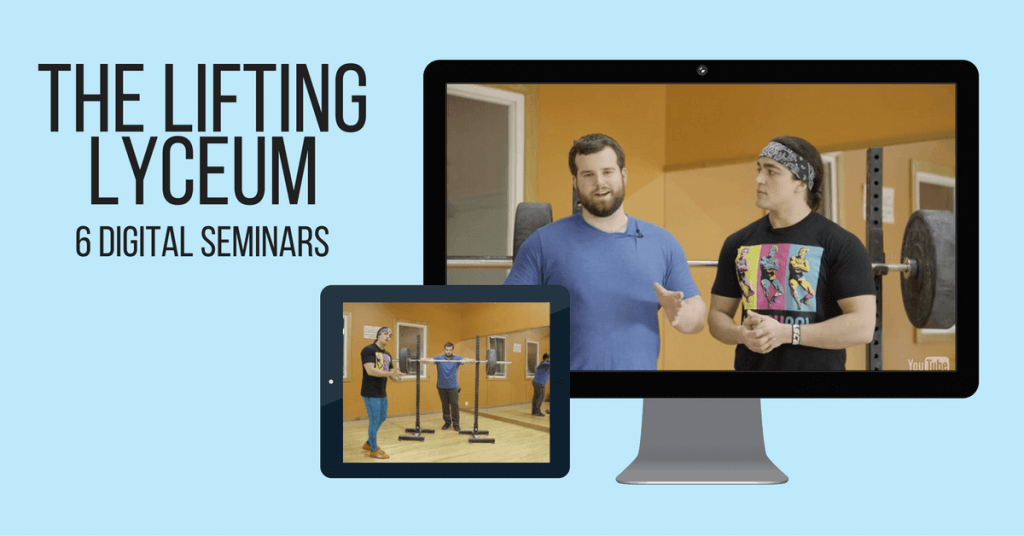
Stronger by Science – Full Lifting Lyceum
Lifting can be extremely satisfying, but it can also be supremely frustrating if you’re not getting results fast enough and you don’t know what to do to get the weight moving again.
Where can you find the information you need?
5-You want to watch short YouTube videos? A clickbait headline for short articles?
Nope. This stuff makes everything better. More confusing.
Most of the information in the fitness industry only gives you tidbits – information that might be interesting, but that doesn’t really change your training or understanding in any real way.
When I speak to readers, clients, and subscribers, it is clear that many people are missing a lot. “puzzle pieces” required.
If you’re stuck, if you’re at a plateau, or if you’re feeling overwhelmed by all of the conflicting lifting information out there, here’s the harsh reality:
It’s not going to get better if you keep doing the same thing and if you keep reading and watching the same surface-level content.
What is the difference between stuck versus un?-stuck?
It’s simple: You must know how to optimize each lift and your training program for your own body and preferences.
To help you gain weight, tweak your form for a lift to make sure it is optimal for your body. (I’ve seen dozens of clients PR immediately after I’ve given them a few pointers on this topic.)
You will always be able to make progress and be productive in the gym if you learn how to adjust your workouts based on your body’s response.
These two simple things can make the difference between being stuck and getting out of your comfort zone.-Sticky is what often makes the difference between elite liters or novice lifters.
But it’s easier said than done, right?
It took me 10 years to find the information necessary to adjust programs or lift technique. It took:
- For a decade, I will dedicate myself to reading 2 hours of exercise science research each day.
- Coaching dozens of athletes.
- Trial–I made an error with my programming and my body.
- These topics were discussed with some of the most respected coaches in the world.
Now, that worked for me since I’ve made lifting and exercise science my full-time job. But you probably don’t have time for that.
Questions we will answer:
Seminars 1 and 2 give you the practical tools to add weight to your lifts right away.
The Big 3: Squat, deadlift, and bench are the first three seminars. We’ll talk about each lift:
- How to personalize the setup
- Correcting technique flaws
- Accessory movements
- Slacks can be brought up
- Equipment
- Cues
- Warming up
- Relevant anatomy and biomechanics
We will also discuss the issues that each lift has, such as the front squat on deadlift, sumo vs. traditional on the deadlift, and the different grip widths on bench.
Seminars 4, 5, 6 will give you the tools to make your life more meaningful.-Term progress: Work Capacity, Training and Programming for Hypertrophy, and Training and Programming for Strength
4. Work Capacity
If you are able to handle it, training more is often better. But what happens when you can no longer recover well enough to keep doing more, or when you simply get so worn out during your workouts that you can’t do more?
We’ll address:
- How much work can you do and how much you can do. Should Be able To Do
- How much work can you recover?
- How to increase your work capacity
- How to monitor recovery
- How to get back into Training after a Work Capability Phase
5. Training and programming for hypertrophy
- What causes hypertrophy? We’ll be discussing tension, damage and metabolic stress.
- How important is volume when building muscle?
- How can you find the right volume?
- Is sarcoplasmic hypotrophy real or a myth?
- Do you need to train to failure?
- Is it better to train your whole body or a part of your body for muscle growth?
6. Strengthening your training and programming
- In-In-depth discussion on periodization (it doesn’t mean what you think).
- What is the relationship between muscle mass and success in powerlifting?
- What’s the best way for lifts to be efficient?
- How important is intensity in building strength?
- How often should you lift? What factors are important in deciding how often to lift?
- How do you peak for a powerlifting match?
- How much do personal leverages impact strength?
Get Stronger by Science – Full Lifting Lyceum Get it now!
Continue reading: http://archive.fo/vR9n8
Here’s what you’ll get in Stronger by Science – Full Lifting Lyceum

Course Features
- Lecture 1
- Quiz 0
- Duration Lifetime access
- Skill level All levels
- Language English
- Students 170
- Assessments Yes
- 1 Section
- 1 Lesson
- Lifetime
- Purchased: Stronger by Science - Full Lifting Lyceum1