
🌟 New Year Offer 🌟
Celebrate 2026 with 30% OFF on all products! Use code: NEWYEAR2026. Hurry, offer ends soon!
(This course is available for immediate delivery) One of the most complicated and advanced computers on Earth can’t be purchased in any store. This amazing device is capable of storing and retrieving vast amounts of information.
The Learning Brain
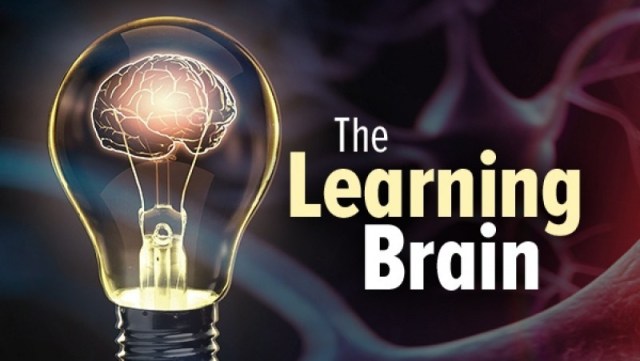
One of the most complicated and advanced computers on Earth can’t be purchased in any store. This astonishing device, responsible for storing and retrieving vast quantities of information that can be accessed at a moment’s notice, is the human brain. How does such a powerful and dynamic machine learn a language, remember how to drive a vehicle, and make memories? What habits can be adopted to make learning more effective throughout our lives? How do traumatic injuries, stress, mood, and other factors affect grey matter? The These are just a few of the many questions that can be answered. The Learning Brain.
These 24 hour lectures provide fascinating insights into how the brain learns. Your journey begins by examining which brain parts are responsible for different types of memory. This includes long-term memories for personal experiences and memorized facts, as well as short-term memory. You will also learn how these memory systems function on a psychological, biological, and psychological level. You’ll acquire a new understanding of how amnesia, aging, and sleep affect your brain. You’ll also discover better ways to absorb and retain all kinds of information in all stages of life. This course is chock full of valuable information whether you’re learning a new language at 60 or discovering calculus at 16. You may need to improve your study habits, learn a new skill or worry about your memories changing with age. The Learning BrainOffers insightful insights and advice.
Locate Your Map Brain’s Memory Areas
You’ll discover that the brain acquires, retains, and recalls information in several distinct ways.
- Explicit Learning Learning information that is conscious and easily put into words refers to information that is available. One example is “semantic memory,” This involves impersonal fact-based memories like the distance from Earth to the sun or capitals of different countries.
- Implicit Learning, Implicit learning, on the other hand, is learning that is unconscious but harder to put into words. Implicit learning is a very important type. “procedural learning,” This is the acquisition of new skills, such as playing the piano and golf.
Your working memory is also used to learn new skills and information. Working memory is the part of our cognitive system that allows us to retain information for a few seconds to minutes at a stretch. Working memory is used to remember the next step in a recipe or add two numbers in your head.
Professor Polk explains the brain regions that are responsible for these different learning systems. To see which brain areas are activated during different learning types, scientists use modern technology such as PET scans or fMRI. This mapping of the brain allows doctors to better diagnose and treat brain damage, learning disabilities, and behavioral anomalies.
Take on sensitive psychological issues
Additionally, children all over the world have specific learning disabilities that can be devastating as well as disorienting. These impairments can lead to learning difficulties that are both more common and less well-known. Professor Polk discusses a variety of these obstacles. Professor Polk discusses dyslexia and how it affects children in school.
Learning can sometimes be more damaging than helpful. The Yes. Professor Polk delved deeper into bad habits in his previous course. The Addictive BrainHere he briefly discusses the effects of addictive substances and how drugs can hijack the very mechanisms that enable us to learn so well. Specifically, all addictive drugs lead to the release of abnormal amounts of the neurotransmitter dopamine, which fools the brain into reinforcing drug-taking behavior, even though it’s harmful. This reinforcement can lead to addictive behavior and irresistible cravings.
Professor Polk provides the latest scientific evidence regarding these conditions. You’ll find a cornucopia of valuable information to better educate yourself, whether you or a loved one struggles with a learning-related problem, or whether you’re simply seeking to better understand how the brain works.
Learn to Learn
Haven’t we all stayed up until dawn cramming for a test, at some point in our life? Or, haven’t we all read and re-read the same paragraph in a book or in a speech we have to give, assuming we’ve memorized it, only to fail to remember it the next day? Professor Polk unravels the web of learning and studying habits in several lectures throughout this course.
- Learn how to “SCoRe.” This is to be said, SKeep your practice moving at a steady pace CYou can challenge yourself to the right level of difficulty. Randomize your studies.
- Learn the four elements of motivation. Find out more “self-efficacy,” or your confidence in learning; “perceived control,” Whichever extent you believe. You You can control how much information you learn about a topic. “intrinsic motivation,” Defined as wanting To learn; and finally “value,” or how much you believe that what you’re learning truly matters.
- Find the most effective study habits. Not all study methods are the same. Find out which ones work best—and worst.
Neuroscience, Not Brain Surgery
Even with no prior experience in psychology, by taking this course you’ll soon have a working knowledge of how we make and retrieve memories, learn new skills, and get better results from studying, all from the vantage point of psychology, neuroscience, and biology. You will be guided by a respected psychologist professor. The Learning BrainThis course provides practical knowledge, facts, and techniques with real-world applications. This course is for students in school, lifelong learners, and anyone who is curious about the inner workings of your mind. It will help you to understand learning better.
Here’s what you’ll get in The Learning Brain

Course Features
- Lecture 1
- Quiz 0
- Duration Lifetime access
- Skill level All levels
- Language English
- Students 49
- Assessments Yes
- 1 Section
- 1 Lesson
- Lifetime
- Purchased: The Learning Brain1