

🌟 New Year Offer 🌟
Celebrate 2026 with 30% OFF on all products! Use code: NEWYEAR2026. Hurry, offer ends soon!
Harness your body’s natural reflex to ‘shake off’ deep-seated stress and trauma with Steve Haines’ expert TRE® guidance. Discover a safe, wordless path to reboot your nervous system and reclaim a profound sense of inner peace and physical balance.
File Size: 8.2 GB.
Steve Haines – Shake Free of Trauma With TRE®

Optimize and sustain your health on multiple levels with a sophisticated system built from the natural trauma responses in animals — so you can disrupt overactive fight-or-flight response patterns, release negative experiences, and experience more connection and peace.
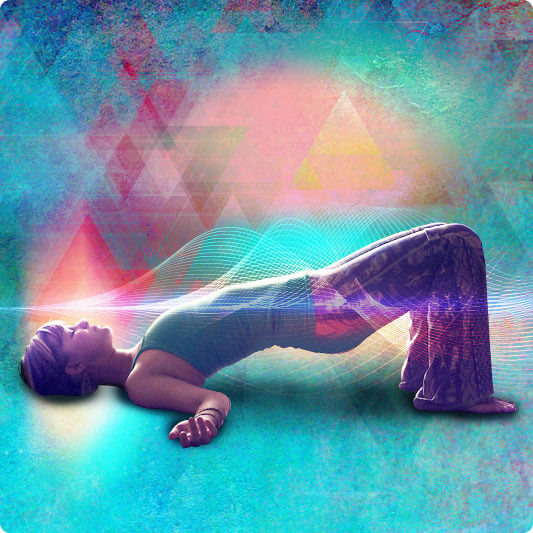
Our central nervous system and body were not designed to hold on to the excess energy that’s created during traumatic events and situations…
… so when we do, we start to feel stress, become worried, experience pains, and manifest a host of other problems.
The energy of trauma is locked within our bodies… and traditional trauma-healing modalities tend to focus on the mental or emotional causes of trauma — which may actuallyreactivate the associated stress and pain along the way.
Tension Releasing Exercises, or TRE®, engage your primitive reflexes to reveal where trauma is residing in your body. You then “shake it out,” releasing long-held tension patterns and experiencing feelings of connection and peace.
An effective way to deal with strong emotions, it’s been described as playful and as mindfulness without the work.
Your central nervous system will find the stimulus of shaking quite novel, and this new stimuli — approached safely and with curiosity — can support learning and growth in all areas of your life.
Join us for a 7-module video course with bodyworker and TRE expert Steve Haines, and explore TRE as a safe, natural process to reboot overprotective reflexes. You’ll harness the power of your reflexes to release trauma and neutralize your own fear-based patterns — while calming your nervous system and gently returning your body to a state of balance.
While the psychology of trauma is complex, Steve believes the physiology is actually quite simple. All trauma is a byproduct of fear, triggered by self-perceived threats or danger. When facing trauma, old parts of your brain are fixed in fight-or-flight or freeze mode. This can become a recurring pattern that’s triggered in future situations.
Steve describes this condition by saying it’s like we all have an inner emotional guard-dog that’s overprotective. TRE retrains your guard dog by soothing it — so you naturally feel safe in more situations.
TRE exercises target specific muscles throughout your body, releasing deeply held trauma through your natural reflexes. These exercises also assist in rebooting the brain patterns that trigger fear and pain responses.
Steve will share how to recognize the early signs of distress — and then return to an inner sense of safety, no matter what you’re experiencing in the world.
By addressing trauma physiologically first, it helps release the downstream patterns psychologically and spiritually as well.
In this experiential online course, you’ll:
- Discover TRE as a simple and effective somatic practice that harnesses the power of your primitive reflexes to release stress, tension, and trauma on all levels of your being
- Witness live demonstrations from Steve performing an intervention on students using TRE
- Explore the TRE ritual of 7 exercises that trigger your natural tremor mechanism
- Recognize the reliable early signs of distress, including signs that show when you’re more activated than you realize
- Learn the power of avoiding freezing, flooding, and dissociating
- Practice guided techniques to support tremors in your hips, spine, and shoulders, and contain your feelings when you’re triggered into a fight-or-flight response or intense reaction
- Deepen your understanding of trauma theory
- Discover how emotions are related to sensations
- Explore the powerful truth that you don’t always need to talk about the past to heal in the present
- Learn about polyvagal theory and your core survival gestures of moving from safe and social to fight-or-flight to freeze
- Deepen your appreciation of the diverse and complex range of psychological behaviors you exhibit when you’re overwhelmed
- Return to the simplicity of finding safety in your body via shaking
- Pace yourself and create an ongoing practice for self-healing
There are wordless stories inside of you, and your capacity for experience is far greater than your capacity for language.
TRE can help you become familiar with a huge range of feeling states. You’ll learn to find the true feeling that’s driving your feelings… and discover that your feelings are not more powerful than you.
You’ll reveal your sovereignty.
Steve’s integrative approach to TRE has already helped thousands around the world shake out of overactive fight-or-flight patterns and into their natural, joyous state.
Your own body can help you shift out of the mental- and emotional-based effects of fear, trauma, and pain — so you can confidently live a deeply empowered life.
What You’ll Discover in These 7 Modules
In this 7-part transformational intensive, Steve will guide you through the fundamental skills you’ll need to successfully integrate a TRE practice into your daily life — to activate your body’s natural reflexes and alleviate deeply held stress, tension, and trauma, while bolstering your built-in capacity to regulate your own wellbeing.
This course will feature step-by-step teachings and experiential practices with Steve. Each session will build harmoniously upon the previous ones, so you’ll develop a complete holistic understanding of the practices, tools, and principles you’ll need to shake free of tension and stress through TRE.
Module 1: Discover a Feeling of Safety & Connection Through the Joy of Shaking
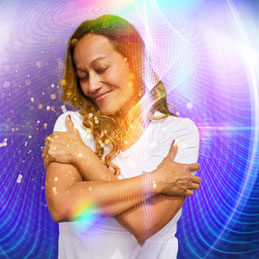
Shaking is a simple, safe tool to help you feel more connected and alive.
Developed by Dr. David Berceli, Tension and Trauma Releasing Exercises (TRE), trigger a natural shaking reflex.
In this opening module, Steve will take you through the history of shaking, a lost practice in many healing traditions. He’ll share insights from ethology — the study of animal behavior — and explain how shaking is a mammalian reflex for discharging stress.
This module will be all about finding safety in the body and the essentials of embodied approaches to working with overwhelm. To heal trauma, you don’t need to understand or to remember. You also don’t need to talk about your most difficult experiences!
You’ll begin working with Steve’s bottom-up approach, where you’ll heal trauma by reconnecting to your body. When you switch off protective reflexes of fight-or-flight or freeze, you free yourself from intrusive thoughts, pain, and stuck emotions.
TRE teaches how to be with intense feelings — without becoming overwhelmed. Shaking is a powerful stimulus to help you release chronic stress and tension. As you’ll discover, shaking helps you wake up your body.
In this module, you’ll:
- Explore the importance of feeling safe, being playful, and being curious
- Learn how to turn on, pay attention to, and turn off tremors
- Discover the TRE ritual of 7 exercises that trigger your natural tremor mechanism
- Learn about Dr. David Berceli and the history of TRE
- Understand core principles from the latest science of trauma
- Start to identify when primitive reflexes begin to hijack your mind and body
Module 2: Shaking to Ground Yourself & Create a Feeling of Being Present & Connected

There is a hidden response to traumatic events.
Nearly everyone knows about the stress response of speeding up to survive…
… but not enough people know about the shutdown response, in which we slow down to survive.
In this module, Steve will explain how shutdown is also known as freeze, dissociation, collapse, and playing dead. Shutdown’s essence is a gesture of immobilizing and switching off so you can survive.
Dissociation is the essence of trauma. For many survivors, it’s the hidden mystery at the heart of trauma. It’s a very confusing state, where you can feel numb, disconnected, and empty. Frequently, you feel stuck, unable to think or act. Often, it feels horrible and scary.
Sometimes, however, dissociation can feel safe, floaty, and expansive, as though you’re no longer bound by your body.
The main chemicals of dissociation are endorphins — your body’s natural painkillers. For many of us, there is a seductive, cozy quality to dissociation. It can seem easier to not feel and to tune out, rather than to remain present.
The opposite of dissociation is being grounded — a beautiful, earthy word that describes being present and connected. As you’ll discover, groundedness is a state in which you’re at home in your body and observant of the space around you.
In this module, you’ll:
- Learn how to feel safe in your body
- Practice simple tools for being grounded
- Discover when daydreaming becomes too much
- Understand the barriers that make it hard to connect to the body
- Discover the power of moving slowly with intense feelings
Module 3: Going Slow as a Way to Quickly Heal Trauma
Modern trauma therapists focus on teaching how to regulate intense feelings. It’s now well understood that going slow is actually the quickest way to heal trauma.
Feeling is difficult, yet it’s a skill that can be taught. Often you’ll need support and community to help you co-regulate before you can self-regulate.
If things are feeling too strange, too quick, too much, or too floaty during the tremor process — you can learn to put the brakes on and stop.
By learning to regulate the tremors of TRE, you can learn to regulate all feeling states.
You’ll develop your skills and strength to help you build a strong, resilient container to hold your trauma.
In this module, you’ll discover:
- How to practice going slow as the quickest way to heal trauma
- Ways to recognize the reliable early signs of distress, including signs that show when you’re more activated than you realize
- Principles for self-regulation: OMG, not as in Oh My God, but as in Orient-Move-Ground
- The power of avoiding freezing, flooding, and dissociating
- A guided practice to intervene and contain your feelings when you’re triggered into a fight-or-flight response or intense reaction
Module 4: Free the Tension in Your Body by Discovering How to Shake It Off
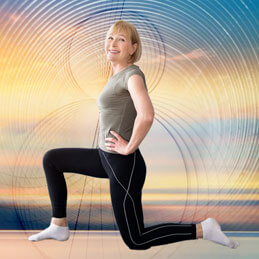
Steve will perform a live demonstration of a TRE intervention on students so you can learn the technique in practice. Tension has a habit of creeping up on us. If we’re not careful, we become a bag of contractions, holding on tightly each and every day in order to survive.
When you’re braced against life and you’re stuck trying to protect yourself, it’s hard work.
With TRE, you can shake it off. You can let go and allow natural tremors to free your body from the inside — a wonderful feeling.
In this module, you’ll explore the key metaphor of releasing tension and trauma. You’ll encourage the tremors to meet the stuck parts of your body.
Steve will share plenty of tips and tricks to help the tremors move seamlessly through your whole body. He’ll help you understand the basic structure of the body so you can appreciate where and why tremors can get stuck.
In this module, you’ll:
- Witness an actual demonstration performed by Steve
- Learn how to shake it off
- Discover the living matrix of fascia in your body
- Learn about your diaphragm and slow, gentle breathing
- Come out of stuck patterns to new creative possibilities
- Practice techniques to support tremors in your hips, spine, and shoulders
Module 5: To Heal… You Don’t Need to Understand or Remember

How do the mind and body connect? This is a very old problem. Shaking is an amazing training in mind-body connection.
At the heart of TRE is profound trust in the wisdom of the body. Trauma is seen as primarily a physiological response rather than a psychological problem.
To heal trauma, you don’t need to understand or remember. The goal is to turn down the dial on protective reflexes that are trying to speed you up or shut you down so you can survive.
This a radical paradigm shift away from thinking and understanding as the key elements of healing.
In this module, you’ll learn how emotions are rooted in the body’s sensations. Steve will guide you to notice and label feelings — and have feelings, rather than become them.
In this module, you’ll:
- Deepen your understanding of trauma theory
- Discover how emotions are related to sensations
- Find new ways of describing and inhabiting your body
- Understand that trauma is about physiology, not psychology
- Learn that you don’t always need to talk about the past to heal in the present
- Practice new feeling states
Module 6: Empowering Your Ability to Respond to Stress Through Understanding the Neurobiology of Trauma
This module is a deeper dive into how the nervous, hormone, and immune systems are involved in trauma, and Steve will perform another live demonstration with students from the class.
Many people are surprised to learn they’re not mad, bad, or broken. When you truly comprehend that protective reflexes are normal reactions to extraordinary events, you take a massive step forward in your healing.
Steve will introduce you to Dr. Stephen Porges’ research — as you’ll discover, it’s full of influential scientific discoveries about primitive survival reflexes. Steve will make Dr. Porges’ polyvagal theory simple and relevant to your daily life.
He’ll explain how, as your perception of a threat increases, you might default to your older reflexes to survive. It’s your neurobiology responding to perceived danger, and Dr. Porges outlines this process in the stages of Orientation, Mobilization, and Immobilization.
In this session, Steve will also review the literature on stress and highlight the insights you can use in ordinary life.
In this module, you’ll:
- Witness another live TRE intervention
- Develop your understanding of stress
- Briefly touch on the complexity of trauma and its wider models in psychology
- Learn about polyvagal theory and your core survival gestures of moving from safe and social to fight-or-flight to freeze
- Deepen your appreciation of the diverse and complex range of psychological behaviors you exhibit when you’re overwhelmed
- Return to the simplicity of finding safety in your body via shaking
Module 7: Interventions to Heal Yourself & Enhance Your Wellbeing

This final module is a chance to rediscover being playful with the tremor process.
After you’ve moved through the previous sessions, there may be all sorts of change happening within you.
You’ll explore classic tools and interventions in TRE to help find coherence, variety, and fluidity in your shaking process.
Building confidence in the strength and power of your body and the tremors can take time. Steve will give you a framework for how tremors commonly progress — and how to develop a sustained TRE practice.
TRE is about you healing yourself. It’s a powerful tool to support your ongoing healing journey.
There are times to develop your strength and resilience as you learn to let go. Other times, you’ll want to go gently, slowly building your capacity to feel.
In this module, you’ll:
- Discover how to build resilience
- Develop your skills to trust the tremors
- Learn how to pace yourself and create an ongoing practice for self-healing
- Recognize when to speed your practice up and when to calm things down
- Understand the power of being curious and playful
An Unprecedented Opportunity to Join the Online Training, Shake Free of Trauma With TRE®
We feel honored that Steve Haines has chosen to partner with The Shift Network to offer this exclusive online training. This is a unique opportunity to learn from a bodyworker and teacher whose powerful insights and pioneering work are helping us heal and awaken ourselves and our world.
If you’re serious about optimizing and sustaining your health on every level of your being, then you owe it to yourself, your loved ones, and our world to take this one-of-a-kind training.
If you’re ready to take the next step in your own evolution, click the register button to reserve your space now.
About Steve Haines
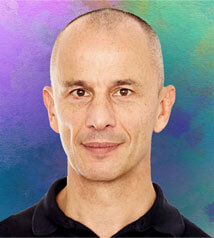
Steve Haines, a bodyworker for over 20 years, is the author of the award-winning Anxiety Is Really Strange, part of a series of graphic books that include Pain Is Really Strange, Trauma Is Really Strange, andTouch Is Really Strange.
Understanding the science of pain and trauma has transformed his approach to healing. He has studied Tension & Trauma Releasing Exercises (TRE®), yoga, Shiatsu, and Biodynamic Craniosacral Therapy (BCST), and teaches TRE and BCST all over the world. His treatments use education, embodied awareness, and light touch to help people move more freely and be more present.
Course Features
- Lecture 0
- Quiz 0
- Duration 10 weeks
- Skill level All levels
- Language English
- Students 125
- Assessments Yes