
🌟 New Year Offer 🌟
Celebrate 2026 with 30% OFF on all products! Use code: NEWYEAR2026. Hurry, offer ends soon!
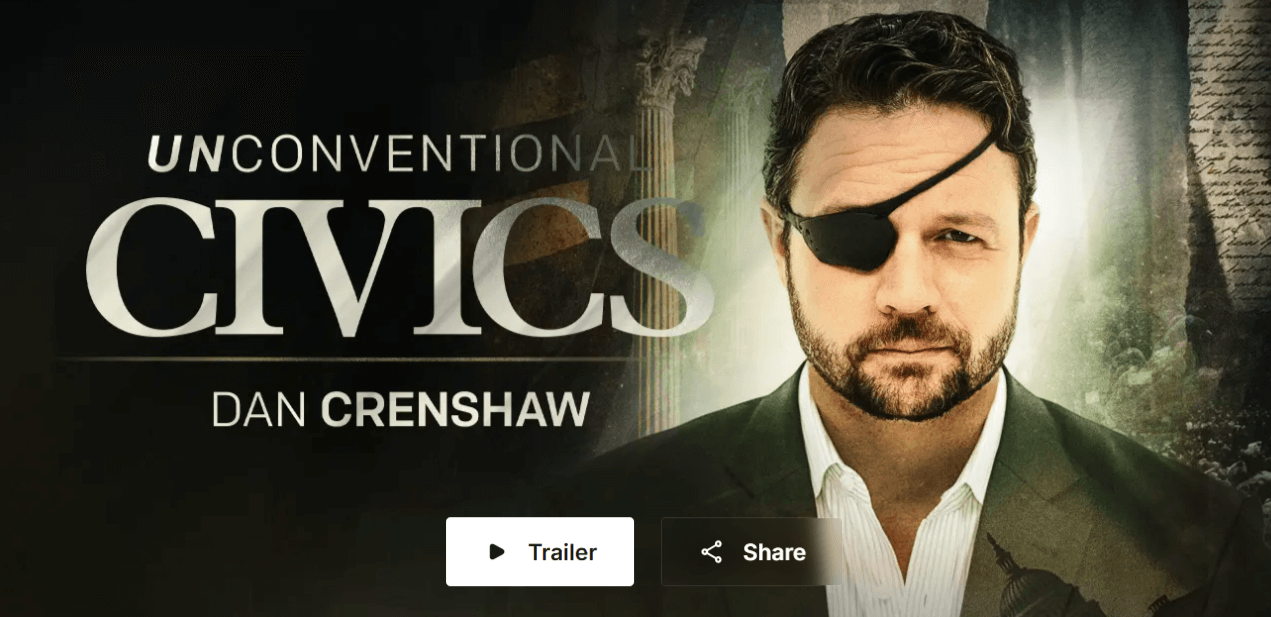
Dan Crenshaw (Peterson Academy) – Unconventional Civics
)
Dan Crenshaw
Politician
In Unconventional Civics, a nine-hour course, Dan Crenshaw walks us through the foundations of American government, civics, and foreign policy. Through engaging narratives, he examines the role of government in society, the interaction between various levels of government and economic systems, the requirements for winning elections, and the concept of civic duty. The course also delves into the two-party system, the inner workings of Congress, and the multifaceted role of modern congressional representatives, concluding with an analysis of American foreign policy and its role in contributing to global order.
Lectures

- Why Government Exists
In our introductory lecture, Dan Crenshaw explores the foundational concepts of government and civics, beginning with the basic question of why governments exist and examining how they evolve from simple leadership structures to complex institutions. The lecture delves into the American founders’ vision of government as outlined in the Declaration of Independence and Constitution, emphasizing the importance of protecting individual rights and establishing checks and balances through a republican system. The discussion concludes by exploring the moral foundations of law and the role of Judeo-Christian principles in Western governance.

- Government in Action
In lecture two, we examine how various levels of government, economic systems, and infrastructure interact to shape modern society—told through the narrative of “Bob,” an average citizen. We examine how local, state, and federal governments interact to provide essential services—from road construction and flood management to education and emergency response—while highlighting the complex global supply chains that enable modern life. Crenshaw also discusses agricultural policy and energy production. Finally, we cover term limits in politics, highlighting the challenges of governing in an increasingly interconnected world and the importance of institutional knowledge in effective policymaking.

- How to Get Elected
In lecture three, we consider the fundamental requirements for winning an election, focusing on two key elements: gaining widespread name recognition and establishing likability among voters. Crenshaw shares his personal journey from Navy SEAL to Congress, detailing the practical aspects of campaign management, including fundraising, voter outreach, and campaign events. The lecture concludes with insights into district mapping, voter demographics, and the importance of possessing genuine knowledge about issues and a clear purpose when running for office.

- Being a Good Citizen
In lecture four, Crenshaw outlines the concept of civic duty and what it means to be a good citizen in America, as seen through the lens of Alexis de Tocqueville’s observations. He focuses on three essential pillars: religion as a moral framework, patriotism through civic engagement, and education for critical thinking. The discussion also examines how modern challenges, particularly social media and declining civic education, impact these pillars while emphasizing the importance of critical thinking and informed citizenship in maintaining a healthy democracy.

- The Political Spectrum
In lecture five, we study America’s two-party system, examining why political beliefs cluster into Democrat and Republican camps through the lens of Thomas Sowell’s constrained versus unconstrained visions of human nature and government’s role. We analyze how different moral foundations and values create predictable political alignments. Crenshaw also addresses the rise of populist movements on both extremes, arguing that despite their ideological differences, the far left and far right share similar dispositional traits, and that America’s success depends on maintaining a healthy balance between these competing visions.

- A Day in Congress
In lecture six, Dan Crenshaw takes us on a journey into the inner workings of Congress through a detailed examination of a typical day, the process of becoming a representative, and the complexities of passing legislation. The discussion covers practical aspects like office selection, living arrangements, committee assignments, and the intricate steps involved in moving a bill through Congress, illustrated through personal examples of successful legislation. Finally, we are given insight into the various ways representatives can effect policy change beyond traditional legislating, including advocacy and public engagement.

- Serving the People
In lecture seven, we learn about the multifaceted role of a modern congressional representative, focusing on three primary responsibilities: voting on legislation, communicating with constituents, and serving as customer service agents for the federal government. The lecture delves into various types of congressional representatives, from “stars” focused on social media presence to “wonks” dedicated to specific policy areas, while also examining a typical day in Congress, including committee hearings, constituent meetings, and the crucial role of congressional staff in managing operations.

- The World Stage
In our eighth and final lecture, Dan Crenshaw examines American foreign policy through the lens of human relations, using the metaphor of a “global dive bar” where nations interact like individuals with competing interests, alliances, and conflicts. He contrasts Eastern powers like Russia and China—who see global affairs as zero-sum—with Western nations that prioritize cooperation and shared values. From Ukraine to the Middle East, the lecture highlights the need for U.S. strength and engagement to maintain global order, warning that withdrawal would invite adversaries to fill power vacuums and threaten the prosperity and freedom of the post-WWII era.
Course Features
- Lecture 0
- Quiz 0
- Duration 10 weeks
- Skill level All levels
- Language English
- Students 133
- Assessments Yes